
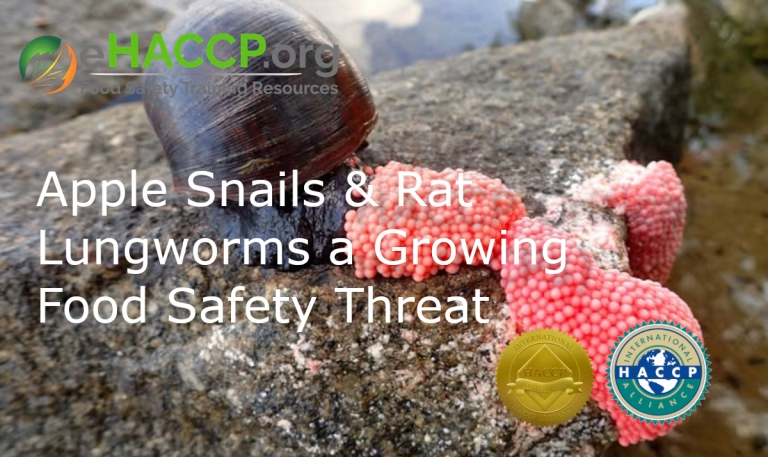
Food safety professionals across the United States and Canada are being urged to increase awareness of apple snails and rat lungworms (Angiostrongylus cantonensis)—an emerging biological hazard with serious implications for produce safety, environmental monitoring, and HACCP programs.
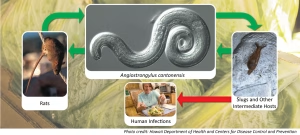
Apple snails and other gastropods can act as intermediate hosts for rat lungworms, a parasitic roundworm capable of causing severe neurological illness in humans. While traditionally associated with tropical regions, these organisms are increasingly being detected in warmer and temperate zones of North America, raising concerns for fresh produce operations, irrigation systems, and field-harvest environments.
Unlike many conventional foodborne hazards, rat lungworms are not eliminated through visual inspection alone and can be introduced into the food supply via contaminated leafy greens, herbs, freshwater environments, and poorly controlled agricultural interfaces.
Why This Matters to Food Safety Programs
From a food safety perspective, apple snails and rat lungworms represent:
- A biological hazard associated with fresh produce and agricultural water
- A risk amplified by environmental persistence and mobility
- A hazard often overlooked during hazard analysis due to its non-traditional nature
These parasites highlight the importance of robust Hazard Analysis and Critical Control Point (HACCP) systems that go beyond product-focused controls and address environmental, agricultural, and human-factor risks.
How HACCP Can Help Control the Risk
While apple snails and rat lungworms are typically managed through prerequisite programs (PRPs), they must still be formally evaluated during hazard analysis. Effective HACCP-based controls may include:
Preventive Controls
- Supplier approval and verification programs
- Field and harvest sanitation programs
- Agricultural water quality management
- Pest and gastropod control programs
- Physical removal and culling during receiving and sorting
Monitoring Procedures
- Routine field and facility inspections for snails and slug activity
- Environmental monitoring in high-risk zones
- Verification of washing and sanitation effectiveness
- Documentation of supplier controls and deviations
Corrective Actions
- Product holds and segregation when contamination is suspected
- Rewashing or disposal of affected produce
- Investigation of root causes (water, field conditions, sanitation gaps)
- Revision of hazard analyses and control measures
When properly identified and documented, these controls can be integrated into a HACCP plan to significantly reduce risk to consumers and the food supply.
Training Is the Key to Prevention
Many food safety failures occur not due to lack of effort, but due to gaps in hazard identification and risk awareness. Apple snails and rat lungworms are a prime example of hazards that are frequently missed without scenario-based HACCP training.
eHACCP.org provides online HACCP training that teaches food safety professionals how to:
- Identify emerging and non-obvious biological hazards
- Integrate environmental and agricultural risks into HACCP plans
- Distinguish between CCPs and PRPs
- Build effective monitoring and corrective action procedures
By learning how to systematically address hazards like parasitic contamination, food safety teams can strengthen their programs, improve audit readiness, and protect public health.
