
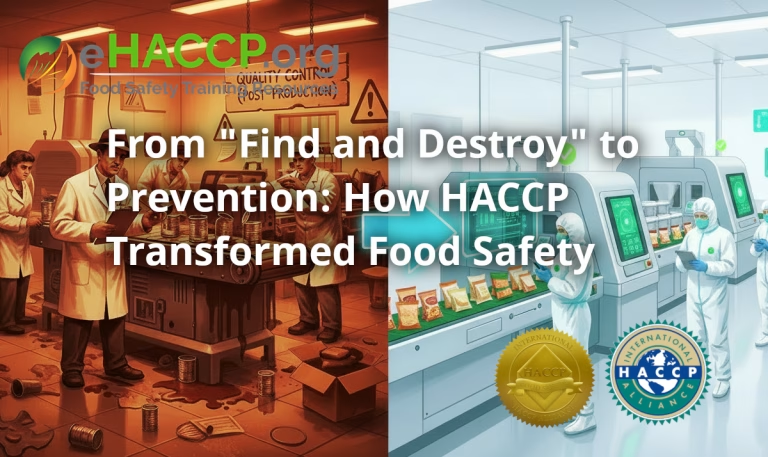
For most of the 20th century, food safety relied on a basic, yet primitive, approach: make the product, and then inspect the finished product to catch problems. This reactive method was called “find and destroy” and it meant contaminated food often reached consumers before anyone knew there was a problem. The introduction and implementation of HACCP (Hazard Analysis and Critical Control Points) fundamentally changed this equation, shifting the focus of food safety from detecting failures to preventing them in the first place.
The “Find and Destroy” Era: A Well Meaning but Costly Approach
Before HACCP became a thing in the 1990s, food safety depended heavily on end-product testing and visual inspections. Inspectors would examine finished products, and if contamination was found, entire batches were discarded. The problems with this approach were significant:
- Contamination was detected too late. By the time inspectors found a problem, unsafe food had often already shipped.
- Testing was limited. You can’t test every item, so contaminated products routinely slipped through.
- Root causes went unaddressed. The system caught some bad batches but didn’t fix the underlying processes that created them.
The Human Cost
The toll of this reactive system was staggering:
- 76 million illnesses, 325,000 hospitalizations, and 5,000 deaths occurred annually in the United States from foodborne pathogens—figures that represented the baseline HACCP was designed to improve.
- Typhoid fever was endemic in the early 1900s, with roughly 100 cases per 100,000 people.
- Trichinellosis infected an estimated 16% of the U.S. population by the 1940s, causing hundreds of diagnosed cases and dozens of deaths each year.
- Globally, contaminated food and water contributed to over 4 billion cases of diarrheal disease annually, killing more than 3 million children under five every year.
The 1993 Jack-in-the-Box E. coli outbreak became a watershed moment. Four children died and over 700 people fell ill from contaminated hamburgers, a tragedy that exposed just how inadequate the inspection-based system had become.
HACCP: A Preventive Revolution
- HACCP flipped the script. Instead of waiting for problems to appear, it requires manufacturers to:
- Analyze hazards that could occur at each step of production
- Identify critical control points where those hazards can be prevented, eliminated, or reduced
- Establish limits, monitoring procedures, and corrective actions to maintain control
- Document everything to verify the system works
This science-based, preventive approach was first developed for NASA in the 1960s to ensure astronaut food was safe. By the mid-1990s, it became mandatory for meat, poultry, and seafood in the United States, and has since spread across the global food industry.
The Results Speak for Themselves
Reduced Illness and Death:
- The USDA estimated HACCP implementation led to a 20% reduction in foodborne illness within seven years of its rollout in meat and poultry plants.
- Infections from E. coli O157:H7, Salmonella, Listeria, and Campylobacter have declined significantly since the 1990s.
- Fewer hospitalizations and deaths mean reduced strain on healthcare systems and immeasurable relief for families.
Improved Consumer Confidence
When consumers trust that food is safe, they buy more of it. HACCP certification signals to retailers, restaurants, and the public that a manufacturer takes safety seriously, building brand loyalty and opening doors to new markets.
Business Productivity and Profitability
The preventive nature of HACCP delivers tangible business benefits:
| Benefit | How HACCP Helps |
|---|---|
| Reduced waste | Catching hazards early prevents costly batch rejections and product recalls |
| Lower liability | Fewer contamination incidents mean fewer lawsuits, settlements, and insurance claims |
| Operational efficiency | Standardized procedures reduce variability and streamline production |
| Market access | Many retailers and international markets require HACCP certification |
| Regulatory compliance | Proactive documentation simplifies audits and inspections |
Companies that once viewed food safety as a cost center now recognize it as a competitive advantage.
The Critical Role of Training
A HACCP plan is only as effective as the people implementing it. Proper training is a key requirement for manufacturing safe food.
Every team member, from line workers to quality managers—needs to understand:
- Why critical control points matter
- How to monitor them correctly
- When and how to take corrective action
- The importance of accurate documentation
Without trained personnel, even the best-designed HACCP system breaks down. Regulatory agencies require documented training, and third-party auditors verify that staff competency matches the written plan. Investing in ongoing HACCP education isn’t optional; it’s foundational to the entire system working as intended.
Looking Back, Moving Forward
The shift from “find and destroy” to HACCP represents one of the most significant public health advances in food safety history. What was once a reactive gamble—hoping inspectors caught problems before consumers did—has become a proactive system designed to prevent hazards from occurring at all.
The numbers tell the story: fewer illnesses, fewer deaths, fewer recalls, and more efficient operations. But behind those statistics are real families who didn’t get sick, real businesses that avoided catastrophic recalls, and a food supply that’s measurably safer than it was a generation ago.
For food manufacturers, the lesson is clear: prevention beats reaction every time. And that prevention starts with a well-designed HACCP plan executed by properly trained people.
